
How Canva is engineering the collapse of Adobe
By democratizing design with AI

Two Fridays ago, I found myself tuning in to watch the Canva keynote with the same excitement I once reserved for Google I/O’s geekiness and Apple events for their Steve Jobs-era magic. Out walked Mel Perkins and her two co-founders—Cliff Obrecht and Cameron Adams—and over the next 90 minutes, they dropped so many design and AI bombs that the audience, myself included, were absolutely electric.
The best part? This wasn’t streaming from the Moscone Center. It was Sydney.
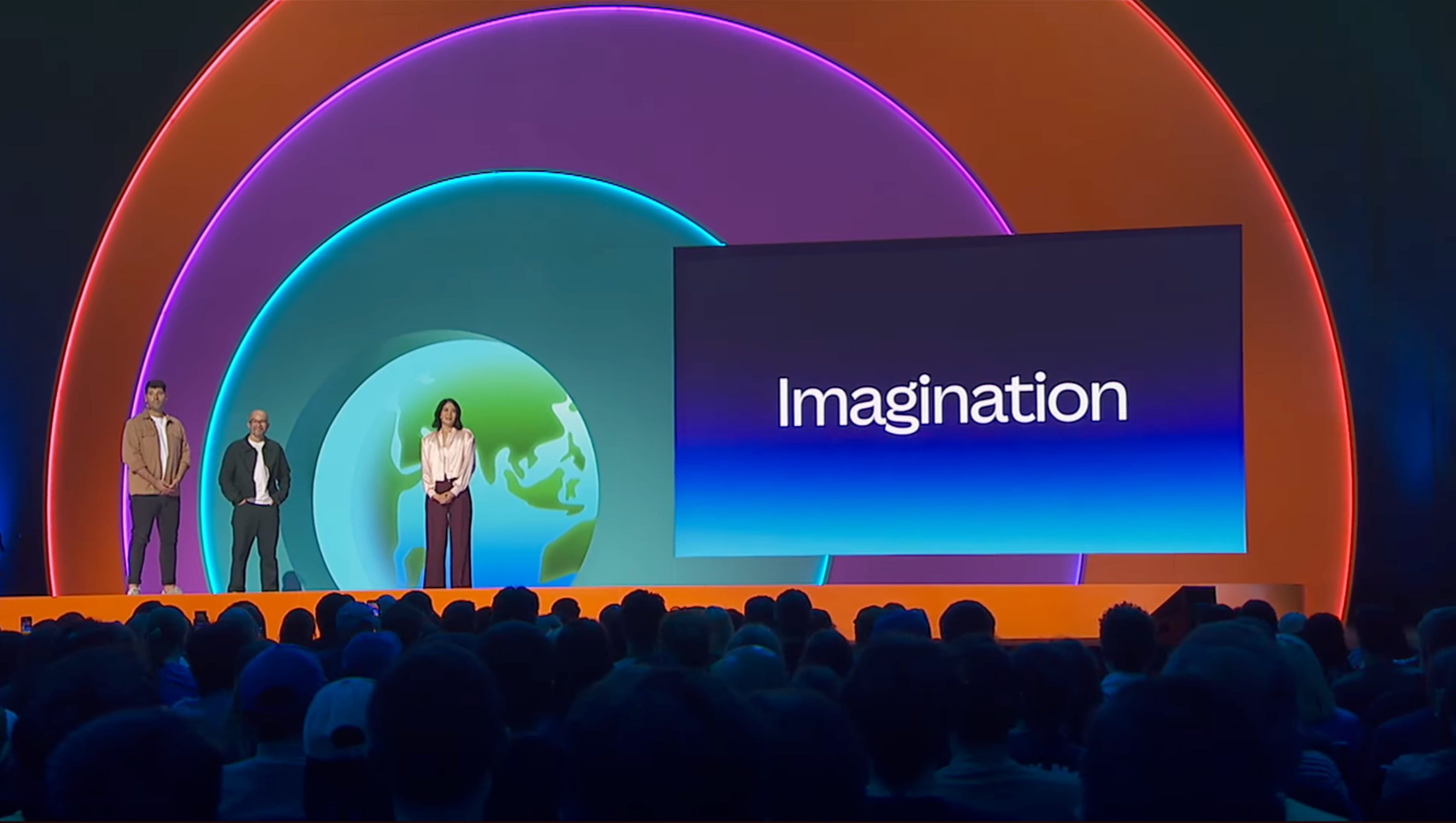
There were no buttoned-up, media-trained tech executives speaking in the carefully modulated tones of sameness. Instead, the stage exploded with personality, diversity, and unapologetic joy. Australian accents rang out proudly. A drag queen performed. The vibe was casual-cool rather than corporate-careful. This was a plucky startup that had grown from a quirky design studio into a full-blown movement—one gunning for the $200 billion giant in the room: Adobe.
Then came the moment that changed everything.
Canva had quietly acquired Affinity earlier this year—the scrappy British company that built the only professional design suite serious enough to compete with Adobe’s crown jewels. Now, Ashley Hewson, Affinity’s CEO, stepped up to the mic and delivered the line that made everyone’s jaw drop:
The entire Affinity professional design suite would now be free. For everyone. Forever.
Not a trial. Not freemium. Just free.
Let me translate what this means if you’re not a designer: Imagine Microsoft announcing tomorrow that the full professional version of Office—the one enterprises pay thousands for—is now free for everyone. That’s the scale of what just happened.
For the average marketer, startup founder, or small business owner, this was the final permission slip. You no longer need to justify a $600/year Adobe subscription or feel like an imposter using “amateur” tools. The professional suite is yours. Free.
In that moment, Canva didn’t just announce a feature. They declared war on the entire design software industry.
The Secret Six-Year Buildup Nobody Saw Coming
Here’s where the story gets really good, because this didn’t start with a keynote in Sydney. It started with rejection.
Back in 2007, Melanie Perkins was a 19-year-old university student in Perth watching her classmates struggle with design software. She’d be teaching students how to use programs for their yearbooks, and it would take an entire semester just to learn the basics. The tools were so complex, so hostile to normal humans, that design had become an elite skill accessible only to those willing to endure years of training.
She had an insight that seems obvious now but was radical then: What if design tools worked the way people think, instead of forcing people to think like designers?
But here’s the move that separated Perkins from every other would-be disruptor: She didn’t rush to build Canva. She spent six years building something else entirely.
Fusion Books. A yearbook design platform. Boring, right? Wrong.
This was strategic patience at its finest. While competitors were burning through venture capital trying to take on Adobe directly, Perkins and Obrecht were quietly building their foundation. They stress-tested their editor, refined their collaboration tools, figured out monetization—all in a contained market where mistakes wouldn’t kill them.
The takeaway being the best launchpads are built in obscurity. By the time Canva launched in 2013, they had 50,000 people on a waiting list and a product that actually worked.
When a $200B Giant Gets Stuck Buying Yesterday
Now let’s talk about Adobe. I have deep respect for what Adobe built. Photoshop, Illustrator, InDesign—these are legendary tools that defined an entire era of digital creativity. But here’s the uncomfortable truth: They’re stuck.
Adobe’s response to disruption has been to open the checkbook. When Figma threatened their dominance in collaborative design, Adobe tried to acquire them for $20 billion. Regulators blocked it. When AI started reshaping creativity, they bolted AI features onto existing tools—a smarter content-aware fill here, an AI background remover there.
These aren’t bad moves. They’re just playing yesterday’s game.
The problem isn’t that Adobe lacks innovation. It’s that they’re optimized for a world that no longer exists.
Think about who Adobe was built for: The giant agencies. The WPP-backed creative studios with dedicated design teams and six-figure software budgets. That world is imploding. WPP itself is experiencing its own painful reckoning as brands realize they don’t need massive agencies when a three-person team with the right tools can out-create and out-ship them.
The future of creativity isn’t happening in glass-tower agencies. It’s happening in bedroom studios. Kitchen table startups. Solo creators building million-dollar businesses from their apartments. Small, nimble teams that need to move fast and can’t wait three weeks for the design team to resize a logo.
Adobe is a $200+ billion giant trying to serve a shrinking cohort of professional designers while the market explodes around them. They’re stuck protecting high-margin subscriptions to professional tools while Canva is building infrastructure for everyone else.
And when you’re that big, that successful, that entrenched? Speed becomes impossible. Every decision has to protect existing revenue. Every new feature has to work for the professionals who might cancel their subscriptions.
Canva has no such constraints. And in the age of AI, that’s everything.
Not Just Tools. An Operating System for Your Brain.
This is where it gets fascinating—and where most people miss what Canva is actually doing.
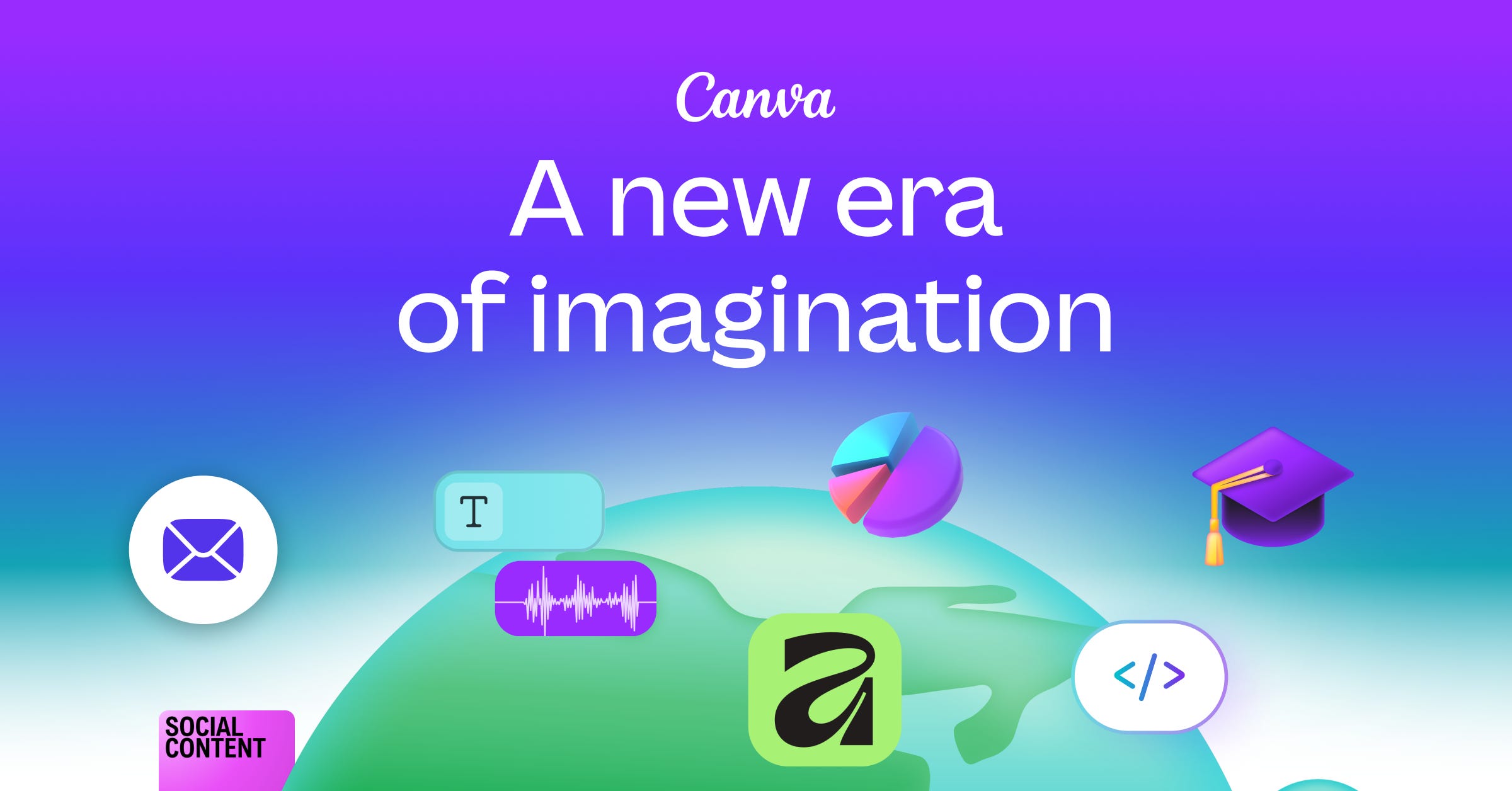
When Melanie took that stage in Sydney, she didn’t talk about better design tools. She talked about moving from the “Information Age” to the “Imagination Era”—from knowing things to creating them. She unveiled what they’re calling the Creative Operating System.
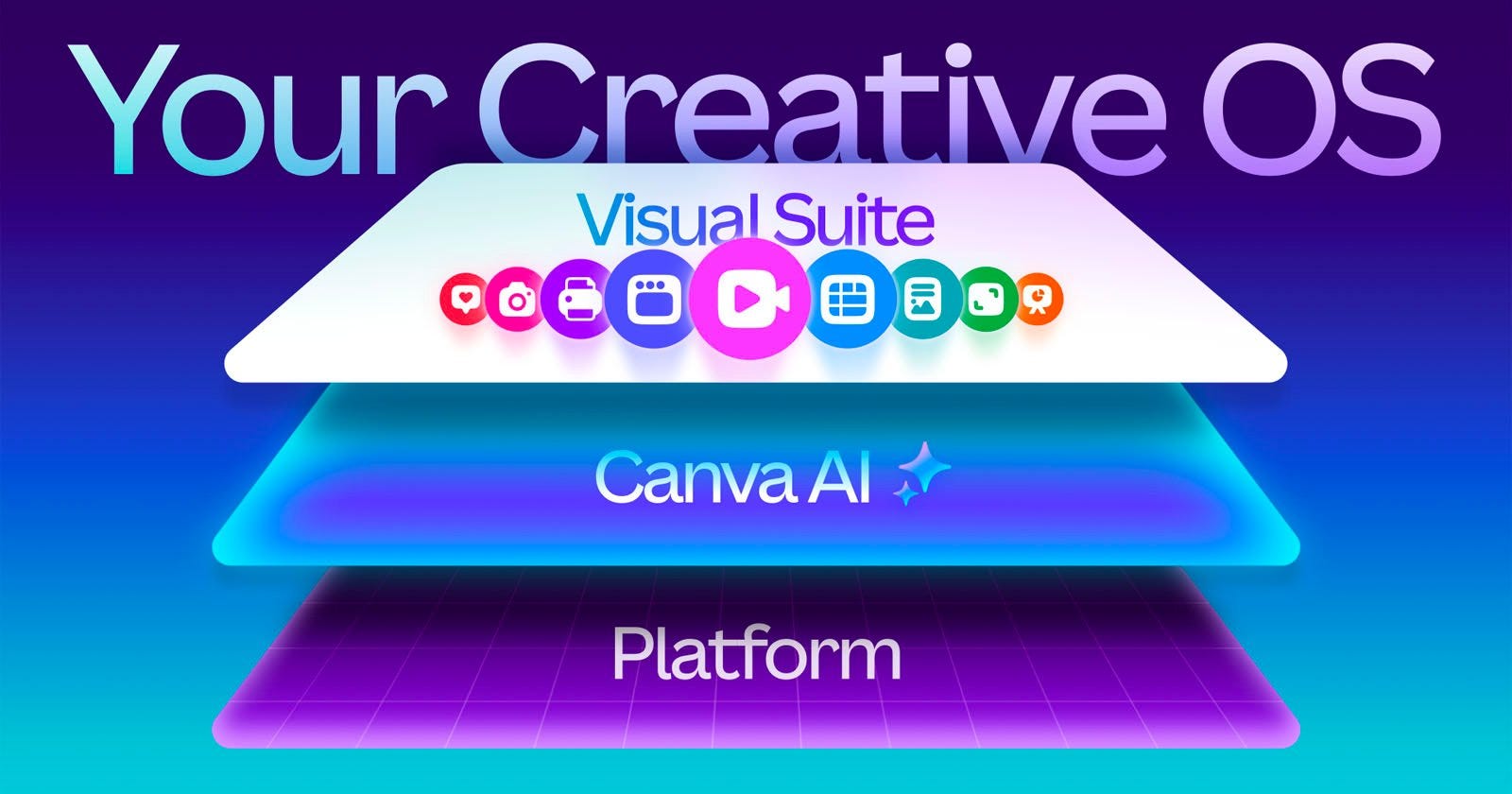
Canva isn’t trying to replace Adobe’s tools. They’re trying to replace the entire concept of design tools.
Think about what an operating system does. Windows doesn’t just give you a word processor—it’s the foundation that every program runs on. iOS isn’t just apps—it’s the infrastructure that makes your phone work.
That’s what Canva is building. And their secret weapon is the Canva Design Model (CDM).
Here’s why CDM matters: It’s not just another AI feature bolted onto existing software (looking at you, Adobe). It’s an intelligence layer trained on design logic itself—hierarchy, composition, typography, brand consistency. It understands why good design works, not just what it looks like.
For non-designers, this is the breakthrough: You can create something that looks professionally designed without understanding design principles. The AI encodes expertise into the system.
For enterprises, this solves the existential nightmare: How do you let 10,000 employees create content without your brand turning into visual chaos? CDM becomes the governance layer—your design director reviewing every piece of content instantly, at infinite scale.
This is why 95% of the Fortune 500 use Canva. They’re not buying design software. They’re buying a creative operating system with brand control built in.
But here’s where the vision gets really ambitious: Canva isn’t stopping at static design.
Look at what they’ve launched in just the past year:
Video editing with AI-powered creation, not just simple trimming
Website building with intelligent layouts and responsive design
Presentations that adapt and flow based on your content
Documents that blur the line between Word and InDesign
AI woven into everything—not as a clever feature, but as the foundation
Adobe adds AI as an enhancement to Photoshop. Canva is building AI as the operating system itself.
The difference? Adobe asks: “How can AI make our existing tools better?” Canva asks: “What if AI is the tool and we just build the interface for it?”
That’s not an incremental improvement. That’s a different paradigm entirely.
The Pincer Move That Adobe Can’t Counter
Now we can understand what happened on that stage in Sydney.
Giving away Affinity wasn’t generous. It was surgical.
For years, professional designers had one last defense against Canva: “That’s cute, but serious designers use Adobe.” By acquiring and liberating Affinity’s professional-grade tools, Canva eliminated that objection entirely.
But look at the economics:
Bottom-up: Free consumer tools capture 200 million users and infiltrate enterprises through sheer ubiquity
Top-down: Free professional tools give the C-suite permission to standardize on Canva company-wide
Monetization: Give away the instruments, charge for the orchestra—the collaboration, the AI governance, the workflow integration, the enterprise controls
The real insight: In the age of AI, the tools become commodities. The value is in the system.
Adobe can’t counter this. They can’t give away Photoshop without destroying their business model. They can’t simplify for the masses without alienating their professionals. They’re trapped.
Canva is free to disrupt because they’ve already built the business model that comes after disruption.
The Imagination Era: Where We’re All Going
But here’s why this matters beyond Canva vs. Adobe.
We’re living through the most dramatic democratization of creativity in human history. And it’s happening everywhere, all at once.
Think about what’s changed in just the last two years:
Presentations? Tools like Gamma are using AI to turn a prompt into a full pitch deck in 60 seconds. No templates. No formatting. Just “I need to present our Q3 strategy” and boom—you have slides.
Video? Your TikTok feed is filled with content that would’ve required a production team five years ago. AI tools are handling color grading, sound mixing, and even generating B-roll on the fly.
Code? Developers are using AI to write entire applications from descriptions.
Music? You can create production-quality tracks without knowing what a MIDI file is.
This is the pattern: Every creative domain is splitting into two markets—tools for professionals and systems for everyone else. And “everyone else” is a much, much bigger market.
Canva saw this first in design, but they’re not stopping there. Their AI is already expanding into video, presentations, documents, websites. They’re building the creative infrastructure for how a billion people will work.
And here’s what keeps me up at night in the best way: We’re still in the first inning.
The Next Chapter Writes Itself in Real-Time
I keep thinking about what Melanie said on that stage: We’re moving from the Information Age to the Imagination Era.
For the last 30 years, competitive advantage came from access to information. Google won by organizing it. Facebook won by distributing it. The constraint was knowledge.
But AI has made information so abundant as to become meaningless. The new constraint is creation. Not “what do you know?” but “what can you make?”
And that’s why Canva matters.
They’re not just disrupting Adobe. They’re building the infrastructure for what comes next—a world where the ability to create is as universal as the ability to search. Where your idea quality matters more than your Photoshop skills. Where a small team in Sydney, Nairobi, or São Paulo can compete with a Fortune 500 company’s creative output because the tools are free and the intelligence is democratized.
This is what made that keynote so electric. It wasn’t just the drag queens or the Australian accents or the stunning stage production (though all of that was fantastic). It was the palpable sense that we were watching a tectonic shift in real time.
The companies that win the next decade won’t be the ones with the best tools. They’ll be the ones who give the tools away and own the system underneath.
Canva understood this when they were building yearbook software in Perth. They understood it when they patiently built for six years before launching. They understood it when they gave away $42 billion in software value on a Thursday in Sydney.
And they’re betting everything that the future belongs not to the gatekeepers, but to the generators.
I, for one, am here for it.
What are you creating that you couldn’t have made five years ago? Hit reply—I read every one and I’m genuinely curious what this democratization looks like in your world.
I really liked this read!! It was informative and easily digestible to those that are not versed in the design world.